Description
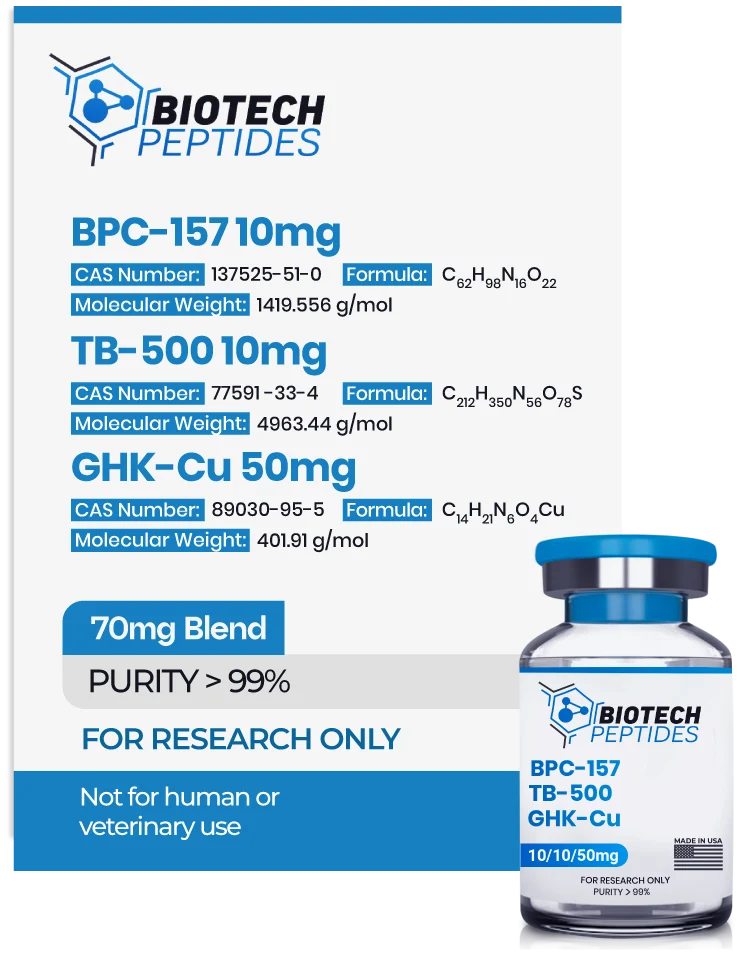
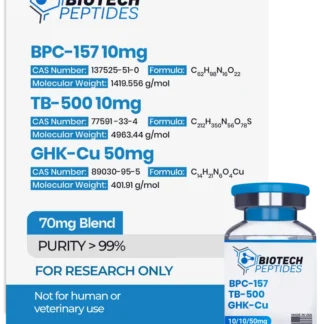
BPC-157 + TB-500 + GHK-Cu Research Blend (70mg)
SKU: Triple-Regenerative-70 | Price: $335.50
What You’re Getting
This is the 70mg blend. It’s a combination of three of the most studied peptides in regenerative research: BPC-157, TB-500 (Thymosin Beta-4 fragment), and GHK-Cu. We don’t call it a “Glow Blend” here. We call it what it is: a serious, synergistic research stack designed for comprehensive investigation into cellular repair, tissue remodeling, and systemic signaling pathways. Think of it as putting three specialized tools in your lab kit, each covering the other’s blind spots.
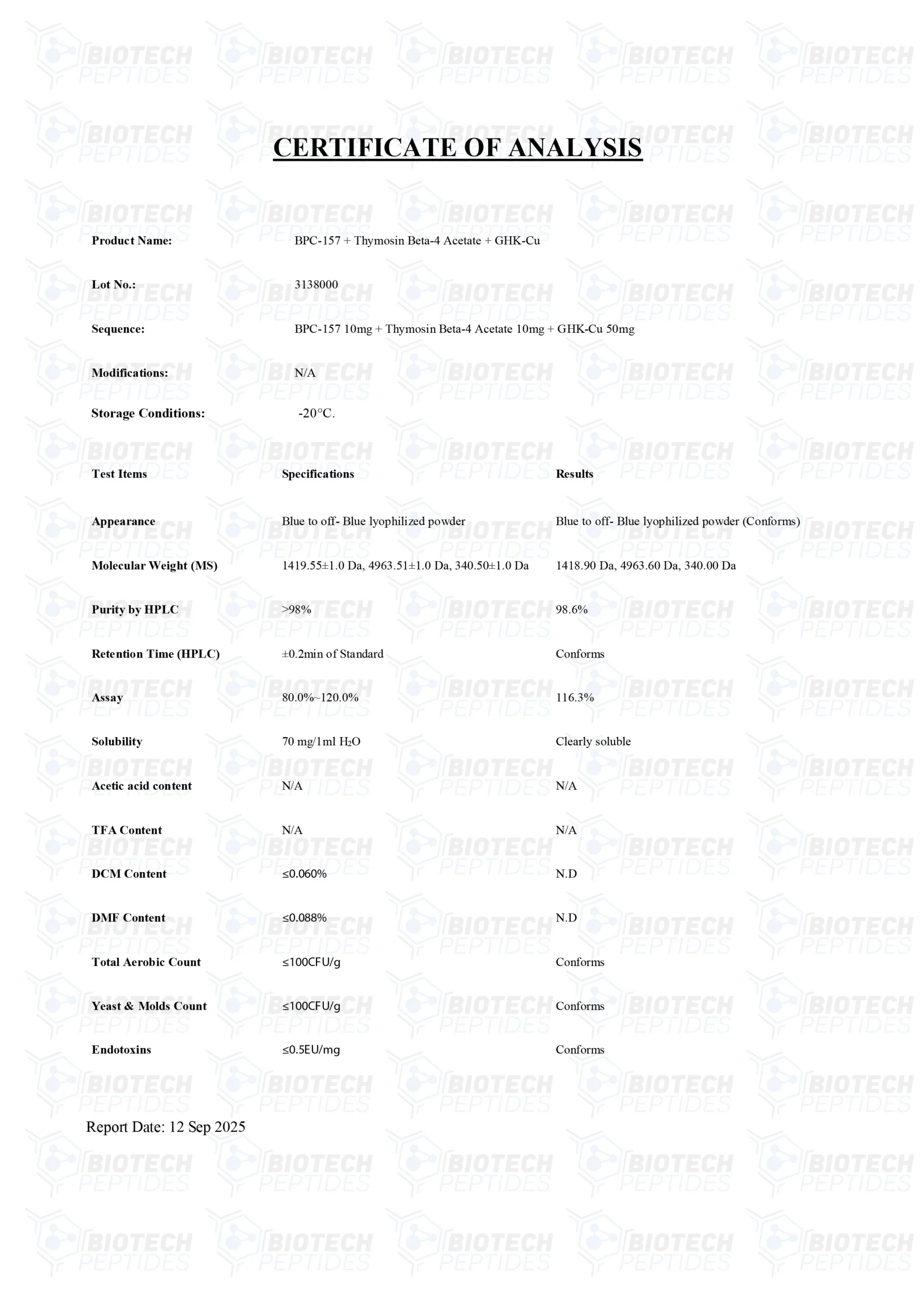
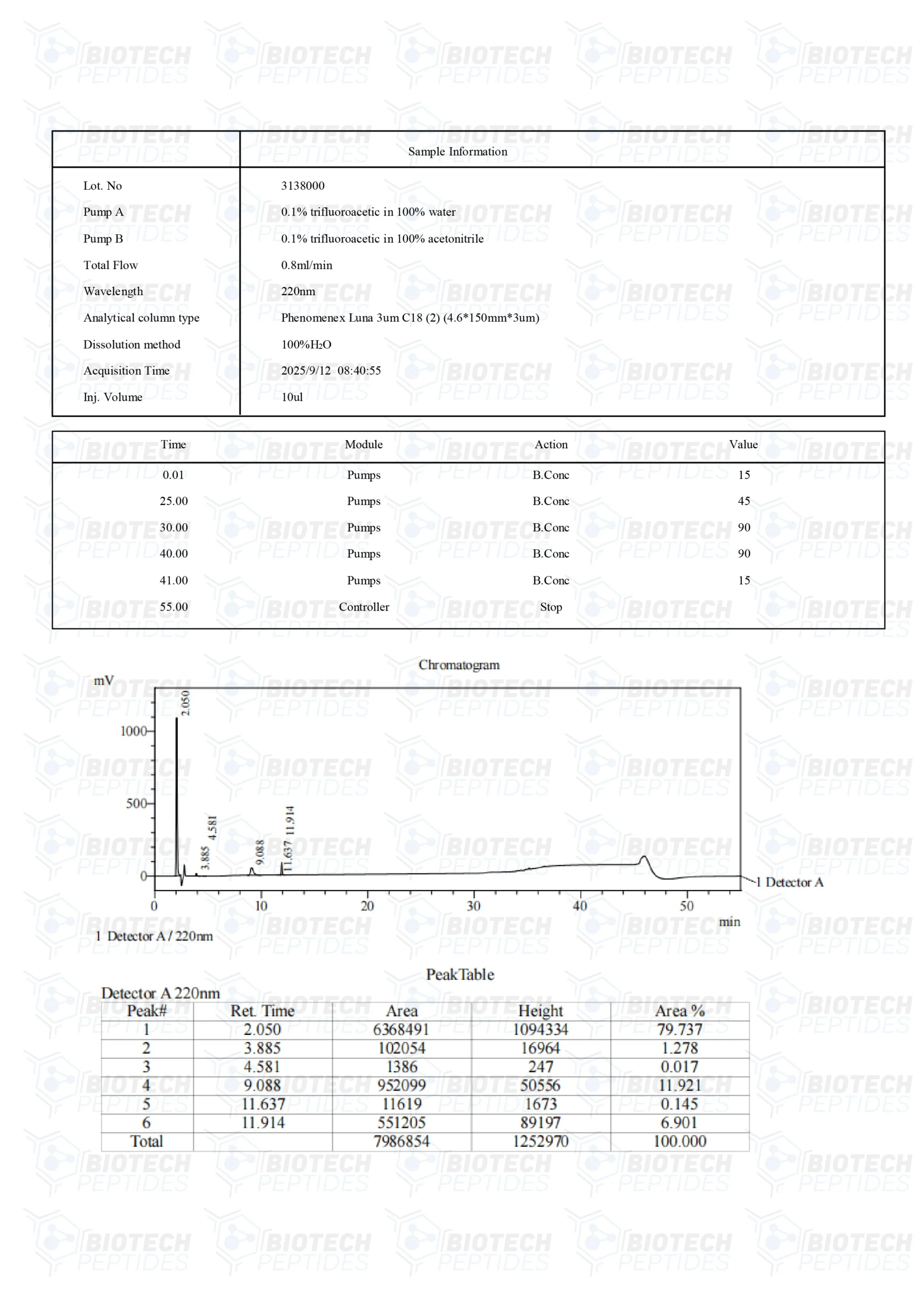
Each vial contains a total of 70mg of lyophilized (freeze-dried) peptide. The specific ratio is proprietary, but formulated based on common research application protocols. It’s sterile-filtered and comes in a sealed vial for stability.
Breakdown of Components (For Your Lab Notes)
BPC-157 (Booly Protection Compound 157)
Molecular Formula: C62H98N16O22 | Molecular Weight: 1419.5 g/mol
A 15-amino acid peptide. Research focuses on its systemic role. Studies suggest it may influence nitric oxide pathways, growth factor expression, and support the body’s own repair signaling at multiple sites. It’s not just local. In vitro models, like the 2011 tendon fibroblast study (Chang et al.), indicate it may support cell survival under stress, migration, and key signaling through paxillin and focal adhesion kinase pathways. It’s a core subject for studies on holistic cytoprotective mechanisms.
TB-500 (Thymosin Beta-4 Fragment)
Molecular Formula: C212H350N56O78S | Molecular Weight: 4963 g/mol
This is a synthetic version of the active region of Thymosin Beta-4. Its primary research focus is on actin binding and cytoskeletal organization. In simple terms, actin is the scaffolding of a cell. By influencing actin polymerization, TB-500 is studied for its potential to support cell mobility, migration to sites of interest, and the overall structural remodeling of tissue. A 2014 study (Santra et al.) also pointed to its possible role in modulating inflammatory signaling via microRNA-146a, making it a multi-angle research target.
GHK-Cu (Copper Tripeptide Complex)
Molecular Formula: C28H48CuN12O8 | Molecular Weight: 744.3 g/mol
Glycine-Histidine-Lysine bound to a copper ion. This one works differently. The copper is key. Research, such as the 2018 review by Pickart et al., examines its role in gene expression related to antioxidant enzymes and extracellular matrix components like collagen and elastin. It’s a signal for “youthful” tissue state. In vitro data (Sakuma et al., 2018) shows it can act as a potent antioxidant, scavenging hydroxyl and peroxyl radicals. In vivo rabbit wound models (Cangul et al., 2006) have shown it may support organized tissue repair and neovascularization. It’s the matrix and antioxidant component of the stack.
The Synergy: Why This Stack Makes Sense for Research
Alone, each peptide has a defined research profile. Combined, they create a comprehensive investigative model for systemic regeneration.
- BPC-157 may handle broad systemic repair signaling and cellular protection.
- TB-500 may handle the cellular mobility and structural (cytoskeletal) changes needed for that repair.
- GHK-Cu may handle the foundational extracellular matrix rebuilding and provide antioxidant support to the local environment.
One covers signaling, one covers structure, one covers matrix and defense. It’s a logical, overlapping coverage model for complex research into mammalian tissue response systems. You’re studying a network, not just a single pathway.
Key Research Citations (At a Glance)
This isn’t marketing. This is where to look. We cite our sources so you can do your job.
- BPC-157 & Tendon Fibroblasts: Chang et al., J Appl Physiol (2011). Found BPC-157 promoted tendon fibroblast outgrowth, survival under oxidative stress, and migration via paxillin/FAK signaling. [PMID: 21030672]
- BPC-157 Systemic Effects: Sikiric P., Inflammopharmacology (1999). Reviewed broad cytoprotective effects across multiple organ injury models (GI, liver, heart) and interaction with key signaling systems. [PMID: 17657443]
- GHK-Cu & Wound Healing: Cangul et al., Vet Dermatol (2006). Rabbit model showed GHK-Cu supported better tissue organization and repair compared to controls. [PMID: 17083573]
- GHK-Cu Antioxidant Action: Sakuma et al., Int J Physiol Pathophysiol Pharmacol
Reviews
There are no reviews yet.